We’ve all been there. You’re driving down Highway 20, enjoying the scenic Nebraska landscape, maybe heading out for a weekend at Merritt Reservoir, when suddenly: ping!: a little glowing icon appears on your dashboard.
For many drivers, that tiny light feels like a heavy weight. Your mind starts racing: Is my car about to explode? How much is this going to cost? Can I make it home?
At Premium Automotive Repair in Valentine, Nebraska, we believe that knowledge is the best cure for “dashboard anxiety.” Your car isn’t trying to ruin your day; it’s actually trying to have a conversation with you. It’s using those lights to tell you something is slightly off before a minor hiccup turns into a major breakdown.
With over 30 years of experience and a team of ASE-certified technicians, we’ve seen every light in the book. This guide is designed to help you decode that “car language” so you can drive with confidence and know exactly when it’s time to call in the pros for engine diagnostics and repair.
The “Traffic Light” System: Color Matters
Before we dive into the specific symbols, let’s talk about the most important thing: the color of the light. Much like a traffic signal, the color tells you the urgency of the situation.
- Green or Blue: These aren’t warnings. They are status indicators. They tell you a system is currently in use, like your high beams, cruise control, or turn signals. No action is needed.
- Yellow or Orange: This is an “advisory” warning. Think of it as a “check soon” signal. Something has drifted outside of its normal operating range. You don’t necessarily need to pull over immediately, but you should schedule an appointment for car maintenance services in the very near future.
- Red: This is the “Stop Now” signal. A red light indicates a serious, potentially dangerous issue that could lead to engine failure or a safety hazard. If you see a red light, safely pull over and call for professional help.

The “Startup Disco”: Why Everything Lights Up at Once
Have you ever noticed that when you first turn your key or push the start button, your dashboard looks like a Christmas tree? For about two seconds, every single light glows.
Don’t panic! This is a perfectly normal “bulb check.” Your car’s computer is simply verifying that all the warning lights are actually working. If a light doesn’t come on during this phase, it might mean the bulb is out, which is its own kind of problem. The time to pay attention is when a light stays on after the engine has started and you’re ready to shift into gear.
Decoding the Most Common Dashboard Lights
Let’s look at the “Big Five”: the lights that tend to cause the most stress for drivers in Valentine.
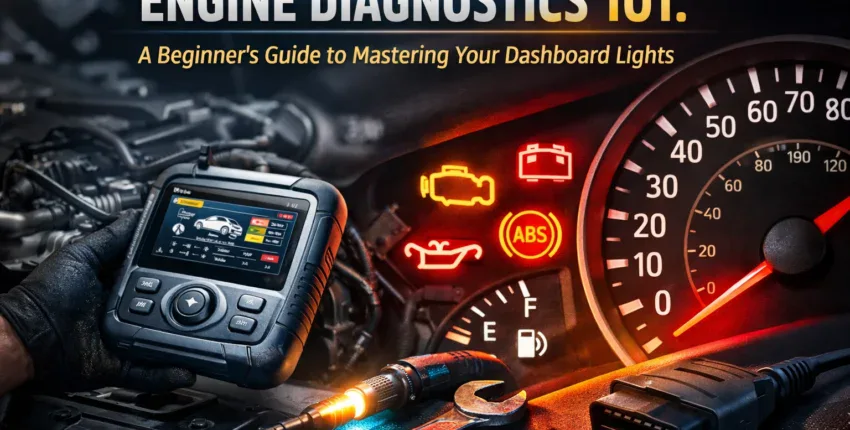
1. The Check Engine Light (The Outline of an Engine)
This is the most famous (and often most misunderstood) light. Because it’s linked to the engine’s main computer, it can be triggered by hundreds of different things: from a loose gas cap to a failing catalytic converter.
- Steady Light: Something is wrong with your emissions or engine management system. Get it checked soon.
- Flashing Light: This indicates a “misfire” that can damage your engine quickly. If it’s blinking, reduce your speed and get to a shop immediately.
2. The Oil Pressure Light (The Leaky Oil Can)
This is one of the “Red” lights you should never ignore. It doesn’t just mean you’re low on oil; it means the oil isn’t circulating properly through the engine. Without oil, the metal parts of your engine will grind against each other, creating heat that can melt the engine in minutes. If this pops up, pull over and turn off the engine as soon as it is safe to do so.
3. The Battery/Charging Light (The Little Rectangle)
Many people think this light means they need a new battery. While that’s possible, it’s more likely a sign that the charging system (the alternator) isn’t doing its job. If the alternator isn’t charging the battery while you drive, your car is running on “borrowed time.” Eventually, the battery will drain completely, and the car will die: likely in the middle of the road.
4. The Engine Temperature Warning (The Thermometer in Waves)
Your engine has a “fever.” This light means the coolant temperature has exceeded safe limits. Overheating is one of the fastest ways to ruin a modern engine. The cost of delaying engine repairs in this scenario can be thousands of dollars in head gasket or engine block damage.
5. Tire Pressure Warning (The Horseshoe with an Exclamation Point)
In Nebraska, we see this one a lot when the seasons change! Cold air is denser than warm air, which causes your tire pressure to drop. While it might just need a little air, it could also mean you have a nail in your tire. Since your tires are the only thing connecting you to the road, this is a vital part of your auto maintenance routine.

Why a “Code” is Not a “Diagnosis”
With the rise of DIY tools, many folks in Valentine head to a big-box store to have their “codes read” for free. While those little scanners can tell you a code (like P0300), they don’t tell you why the code happened.
Think of it like going to the doctor with a cough. The “code” is the cough. But is the cough caused by allergies, a common cold, or pneumonia? You need a professional to find the root cause.
At Premium Automotive Repair, our engine diagnostics and repair process goes way beyond a simple code. Our ASE-certified technicians use high-end diagnostic equipment to look at “live data” while the car is running. We use our 30+ years of experience to trace the electrical path, check for vacuum leaks, and test individual sensors. We don’t just clear the light; we fix the problem so the light stays off.
The Peace of Mind Factor
Ignoring a dashboard light is like ignoring a toothache. It might go away for a day, but it’s going to come back: and it’s probably going to be more expensive. Why regular car diagnostics matter is simple: catching a problem early saves you money and prevents you from being stranded on the side of a rural road.
When you bring your vehicle to us, you’re not just getting a repair; you’re getting the peace of mind that comes with local expertise. We live and work in Valentine, NE, and we treat every car like it belongs to one of our neighbors: because it usually does.

Don’t Let the Lights Dim Your Drive
Mastering your dashboard lights doesn’t mean you need to become a mechanic. It just means you need to know when to listen to your car and who to call when it starts talking.
If you’re seeing a persistent light or just feel like your car isn’t performing the way it should, don’t wait for a breakdown. Whether it’s a simple oil change or a complex electrical diagnostic, we are here to help.
Stop by and see us at Premium Automotive Repair in Valentine. We’ll help you decode the mystery, fix the issue, and get you back on the road safely.
Ready to clear those lights?
Contact us today or visit our About Us page to learn more about our commitment to the Valentine community.