
If you drive around Valentine, Nebraska, your tires work harder than they might on smooth city pavement. Sand, gravel, ruts, unpaved county roads, highway miles, heavy loads, and changing weather can all affect how your tires wear.
That is why regular tire rotation is more than a routine item on a maintenance checklist. Moving your tires into the correct positions at the right intervals helps distribute wear, preserve traction, and get more useful life from the entire set.
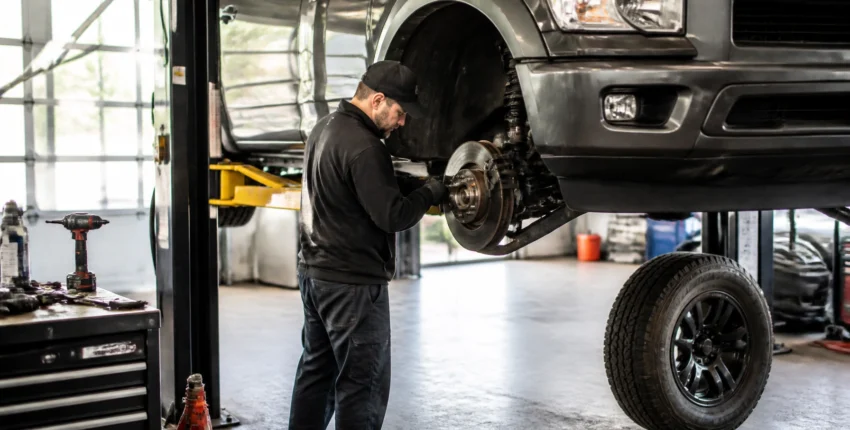
At Premium Automotive Repair in Valentine, NE, our ASE-certified technicians inspect your tires as part of the service and give you straightforward advice based on your vehicle, driving habits, and actual tire condition.
What Does a Tire Rotation Do?
A tire rotation involves moving each tire to a different position on the vehicle according to the correct rotation pattern. The goal is to help all four tires wear as evenly as possible.
Your tires do not all perform the same job:
- Front tires often handle steering, braking, and much of the engine’s weight.
- On front-wheel-drive vehicles, the front tires also deliver power to the road.
- Rear tires may wear differently depending on suspension condition, load distribution, and drivetrain.
- Trucks and SUVs can experience additional wear when regularly used for towing, hauling, or gravel-road driving.
A proper rotation accounts for these differences. The technician may move tires front to rear, cross them to opposite sides, or use another pattern depending on whether the tires are directional, staggered, or designed for a particular position.
Simply moving the tires without checking the manufacturer’s recommendations is not enough. The pattern must match the vehicle and tire design.
Why Valentine and Sandhills Driving Can Increase Tire Wear
Local driving conditions matter when deciding how often your tires need attention.
Gravel roads can place more stress on the tread and sidewalls. Loose stones may become lodged in the tread, while repeated driving over rough surfaces can contribute to irregular wear. Ruts and uneven shoulders can also force the suspension and steering components to work harder to keep the vehicle tracking straight.
Seasonal Nebraska weather adds another factor. Cold temperatures reduce tire pressure, while warmer conditions increase it. Pressure changes can affect the contact patch between the tire and road. If a tire is consistently underinflated, its outer shoulders may wear faster. Overinflation can concentrate wear toward the center of the tread.
Winter freeze-thaw cycles may also contribute to potholes and rough pavement. A hard impact can disturb wheel alignment or damage a tire even when there is no immediate flat.
For drivers in Valentine and surrounding Sandhills communities, regular inspections are a practical investment in safety. Your tires may face more varied conditions in one week than they would on a smooth urban commute.
How Often Should You Rotate Your Tires?
Many vehicles require tire rotation roughly every 5,000 to 8,000 miles, but your owner’s manual should be the first reference. Some manufacturers specify a different interval or rotation pattern.
For many local drivers, scheduling a rotation with an oil change is an easy way to remember. If your vehicle’s oil-change interval is longer than the tire manufacturer’s recommendation, follow the shorter schedule.
You may want to discuss a more frequent inspection or rotation if you:
- Drive regularly on gravel or unpaved roads
- Travel long distances on Nebraska highways
- Tow a trailer or carry heavy loads
- Drive a pickup, SUV, or four-wheel-drive vehicle
- Use aggressive all-terrain tires
- Notice vibration, pulling, or unusual tread wear
- Have recently hit a pothole, rut, or road debris
Rotating closer to 4,000 to 6,000 miles may be a sensible approach for some vehicles exposed to demanding local conditions. That is not a universal rule, however. Tire type, drivetrain, suspension condition, and the vehicle manufacturer’s recommendations all matter.
Signs Your Tires Are Wearing Unevenly
You do not need specialized equipment to notice every tire problem. A quick visual and physical check can reveal warning signs before the damage becomes severe.
Outer shoulder wear
If the outside edges of the tread are wearing faster than the middle, the tires may be underinflated. Repeated cornering, heavy loads, or alignment concerns can also contribute.
Center tread wear
Wear concentrated in the middle of the tread can indicate overinflation. Since tire pressure changes with temperature, check pressure when the tires are cold and use the vehicle manufacturer’s specification.
Feathering or a sawtooth feel
Run your hand lightly across the tread, taking care not to touch anything embedded in it. If the tread blocks feel smooth in one direction but sharp in the other, the tire may be feathering. This pattern can point to alignment or suspension issues.
Cupping or scalloped patches
Cupping appears as a series of dips or scooped sections around the tread. It may be connected to an unbalanced wheel, worn shocks or struts, loose suspension components, or repeated rough-road impacts.
One-sided wear
When one inner or outer edge wears much faster than the rest of the tread, an alignment inspection is important. Continuing to rotate the tires without correcting the underlying issue will not stop the wear.
Vibration or road noise
A vibration through the steering wheel may be related to a front wheel or tire. A vibration felt through the seat or floor can involve the rear tires or wheels. A humming, thumping, or droning sound may also signal tire irregularities or another mechanical concern.
If you see cords, bulges, cracks, severe cuts, or very low tread, do not wait for the next rotation appointment. Have the vehicle inspected promptly.

Tire Rotation, Alignment, and Balancing: What Is the Difference?
These services are related, but they solve different problems.
Tire rotation
Rotation changes the position of the tires to help distribute normal wear more evenly. It does not correct a bent wheel, damaged suspension component, improper alignment, or an out-of-balance tire.
Wheel alignment
An alignment adjusts the angles of the wheels so they point and track correctly. You may need an alignment check if your vehicle:
- Pulls left or right on a straight road
- Has a steering wheel that sits off-center
- Shows rapid wear on one tire edge
- Feels unstable or wanders
- Has recently experienced a hard pothole or rut impact
Sandhills roads can make alignment concerns more likely simply because rough surfaces and impacts place additional stress on steering and suspension components.
Tire balancing
Balancing corrects uneven weight distribution in the tire-and-wheel assembly. A wheel weight can come loose, or a tire may not spin evenly after installation.
Balancing is especially worth checking when you feel a vibration at highway speeds or notice cupping and scalloped tread. A tire rotation appointment is a convenient time to ask for a balance check, particularly if the symptoms appeared recently.
What Happens During Professional Tire Rotation Services in Valentine?
At Premium Automotive Repair, a tire rotation is an opportunity to inspect more than tire position. Our technicians can look for:
- Uneven tread wear
- Low or changing tire pressure
- Punctures, sidewall damage, or bulges
- Abnormal tread patterns
- Loose or damaged wheels
- Alignment-related wear
- Suspension concerns that may affect tire life
We also follow the correct rotation pattern for your vehicle and tire design. Proper wheel installation and torque matter because your tires and wheels are essential safety components.
Our goal is not to recommend services you do not need. If your tires look healthy and the wear pattern is normal, we will tell you. If we find an alignment, balancing, or suspension concern, we will explain what we see, why it matters, and what should be addressed first.
That honest approach is part of what makes our family-owned shop different. With ASE-certified expertise, more than 30 years of hands-on experience, and upfront pricing, we focus on getting the job right the first time.
Make Tire Care Part of Your Maintenance Routine
Regular tire rotation can help you avoid premature replacement, maintain more consistent traction, and catch developing problems early. For drivers in Valentine, NE, it is one of the simplest ways to adapt routine maintenance to gravel roads, rough surfaces, heavy-use vehicles, and changing Nebraska weather.
Check your owner’s manual for the recommended interval, inspect your tires regularly, and pay attention to sensations such as pulling, vibration, squealing, or a rough ride. If something feels different, it is worth having a professional take a closer look.
Need tire rotation services in Valentine? Contact Premium Automotive Repair to schedule an inspection with a trusted local team. We will provide honest advice and dependable service to help your tires: and your vehicle: last longer.